
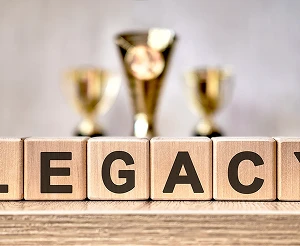
A Legacy of Leadership: What Today’s Leaders Can Learn from Bai Kelfa Sankoh
Leadership is not just about holding a title or occupying a position of power—it’s about creating lasting change, inspiring others, and navigating challenges with wisdom and integrity. Bai Kelfa Sankoh I, a paramount chief in Sierra Leone, exemplified these qualities and more, leaving behind a legacy of leadership that continues to resonate today. His approach to leadership offers valuable lessons for modern leaders, whether they’re guiding nations, communities, or organizations.
In The Legacy of Bai Kelfa Sankoh I by Abdul J. Sankoh, the author carefully traces the life and leadership of Bai Kelfa, drawing out the essential qualities that made him one of the most influential leaders in Sierra Leone’s history. His leadership was marked by humility, strategic foresight, and an ability to navigate the cultural complexities of his time. These qualities are just as relevant today as they were during his reign, and in this blog, we’ll explore how his leadership principles can be applied to modern-day challenges in both political and community leadership.
Humility as the Foundation of True Leadership
One of the most remarkable qualities of Bai Kelfa Sankoh was his deep humility. Despite rising to prominence as a paramount chief and overseeing significant territorial expansion and societal transformation, he never saw himself as above the people he served. Instead, he viewed his role as a steward of his community’s welfare, always putting their needs above his own personal desires.
Bai Kelfa’s leadership was grounded in the idea that true leaders are not distant or elevated but are deeply connected to the lives of their people. He didn’t lead from a palace or with grand displays of power. Instead, he was present among his people, living in the same conditions and sharing in their daily struggles. He actively listened to their concerns, acknowledged their wisdom, and worked alongside them to build a better future.
What Today’s Leaders Can Learn: In a world where political leaders, CEOs, and influential figures often become disconnected from those they serve, Bai Kelfa’s example of humility is a breath of fresh air. Modern leaders can learn that leadership is not about ego or personal glory but about serving with humility. The most successful leaders today are those who remain grounded, connect with their communities, and listen attentively to the people’s needs. Leadership should always be about empowering others, not elevating oneself.
Strategic Thinking for Sustainable Success
Bai Kelfa Sankoh’s rise to leadership was not a result of brute force or impulsive decisions. His early years as a kola nut trader shaped his ability to think strategically, evaluate situations carefully, and make decisions that would have long-term benefits for his community. He understood that true leadership wasn’t about reacting to challenges as they arose but anticipating problems and addressing them with foresight.
One of the key moments in his leadership was when he advised his people to engage peacefully with the colonial British forces rather than resist them militarily. While many local leaders chose confrontation, Bai Kelfa saw the bigger picture. He understood that an open conflict could result in the loss of lives, resources, and stability for his people. Instead, he counseled for strategic cooperation, which ultimately led to the Munu Chiefdom being recognized as a distinct and autonomous region by the colonial powers.
What Today’s Leaders Can Learn: In today’s fast-paced, volatile world, strategic thinking is more important than ever. Whether navigating the political terrain, running a business, or leading a community organization, leaders must adopt a proactive mindset. They need to think long-term and be able to anticipate the consequences of their decisions. Like Bai Kelfa, modern leaders can benefit from not rushing into conflicts but instead weighing their options carefully and choosing paths that offer sustainable success for all involved.
Bridging Cultural Divides and Uniting Communities
One of Bai Kelfa’s most significant accomplishments was his ability to bridge cultural divides within his community. He was born into a lineage that was deeply rooted in his mother’s Kamara family but also connected to his father’s Sankoh family. This blend of ancestral ties gave him a deep understanding of both local traditions and the dynamics of different communities. He was able to navigate these complexities and unite various factions, even when tensions threatened to divide them.
Bai Kelfa’s leadership wasn’t about imposing a singular worldview but about finding common ground. As he rose to power, he forged alliances with different ethnic groups, respected their customs, and incorporated their voices into decision-making. He understood that true unity comes from respecting differences and finding shared goals. His ability to unite diverse communities was crucial in his creation of the Munu Chiefdom, which brought together various groups under a common leadership.
What Today’s Leaders Can Learn: In a world that is increasingly polarized by cultural, racial, and ideological divides, Bai Kelfa’s ability to unite people from different backgrounds offers an invaluable lesson. Today’s leaders—whether political figures or community organizers—need to focus on inclusivity. The most effective leaders are those who can bridge divides, bring people together, and find common ground. It’s not about forcing agreement but fostering dialogue and collaboration. A leader’s ability to respect diversity and unite people towards a common purpose is one of the greatest strengths they can possess.
Courage to Challenge the Status Quo
Bai Kelfa Sankoh was not afraid to challenge the status quo, especially when it came to harmful traditions. One of the most significant stands he took was against the Orjeh society, a secretive group that practiced witchcraft detection and accused people of crimes based on superstitions. Bai Kelfa viewed these practices as harmful to his people’s well-being, and he took decisive action to eradicate them, even though they were deeply ingrained in the community’s traditions.
His ability to challenge established norms and stand firm in the face of opposition shows that true leadership sometimes requires courage—courage to make difficult decisions and stand up for what’s right, even when it goes against popular opinion.
What Today’s Leaders Can Learn: Leaders today must be willing to challenge systems and practices that perpetuate harm or inequality, even when those systems are long-established. Whether it’s addressing social injustice, fighting corruption, or advocating for the environment, modern leaders must have the courage to take bold stands. Bai Kelfa’s example teaches us that leadership is not about complacency; it’s about making tough choices that will ultimately benefit the greater good.
Focus on Community Building and Sustainable Development
Bai Kelfa understood that true leadership goes beyond political maneuvering—it’s about improving the lives of the people you serve. Throughout his reign, he focused on community building and sustainable development. He prioritized the construction of roads, the establishment of infrastructure, and the advancement of education. His efforts in expanding his chiefdom and creating a stable, prosperous community were driven by a vision of long-term growth and unity.
Even in the face of colonial pressures, Bai Kelfa was not solely concerned with maintaining power; he was committed to improving the lives of his people, ensuring that future generations would benefit from the stability and growth he fostered.
What Today’s Leaders Can Learn: In today’s world, leaders must focus not just on short-term goals but also on long-term sustainability. Community development is essential, and leaders must invest in creating the conditions for future success. Whether it’s through economic policies, educational initiatives, or infrastructure development, leaders should focus on creating a foundation for prosperity that can be built upon for generations to come.
Final Thoughts
Bai Kelfa Sankoh I’s leadership offers timeless lessons for today’s leaders. His humility, strategic thinking, ability to unite diverse communities, courage to challenge harmful traditions, and focus on sustainable development are principles that continue to resonate today. As we face new challenges in a rapidly changing world, the leadership qualities of Bai Kelfa, as captured in The Legacy of Bai Kelfa Sankoh I by Abdul J. Sankoh, can serve as a guide, reminding us that true leadership is not about power or control—it’s about service, vision, and the ability to inspire positive change.

The Legacy of Bai Kelfa Sankoh I is a tribute to a visionary leader whose impact continues to inspire. The author, AJ Sankoh, reserves all rights to the content. No part of this book may be reproduced without permission.
Navigation
Contact Us


Follow Us on
© 2026 Abdul J Sankoh. All rights reserved.
Privacy Policy | Terms & Conditions